Gallery
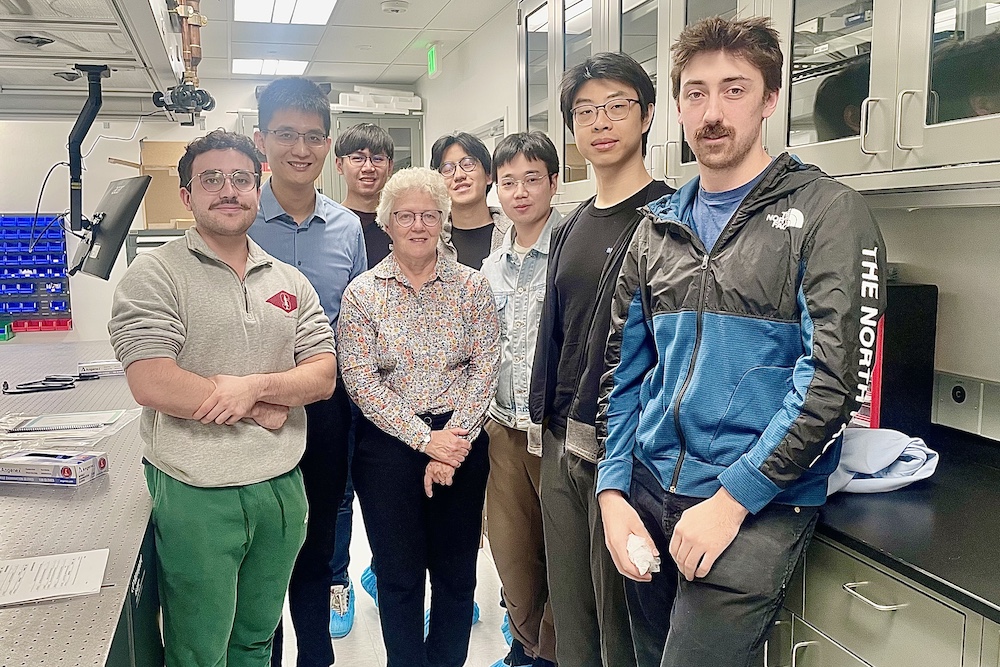
Visit by Anne l'Huillier (October 2025)
Prof. Anne l'Huillier visited our Varian basement lab while it was still in a low entropy state.
Visit by Anne l'Huillier (October 2025)
Prof. Anne l'Huillier visited our Varian basement lab while it was still in a low entropy state.
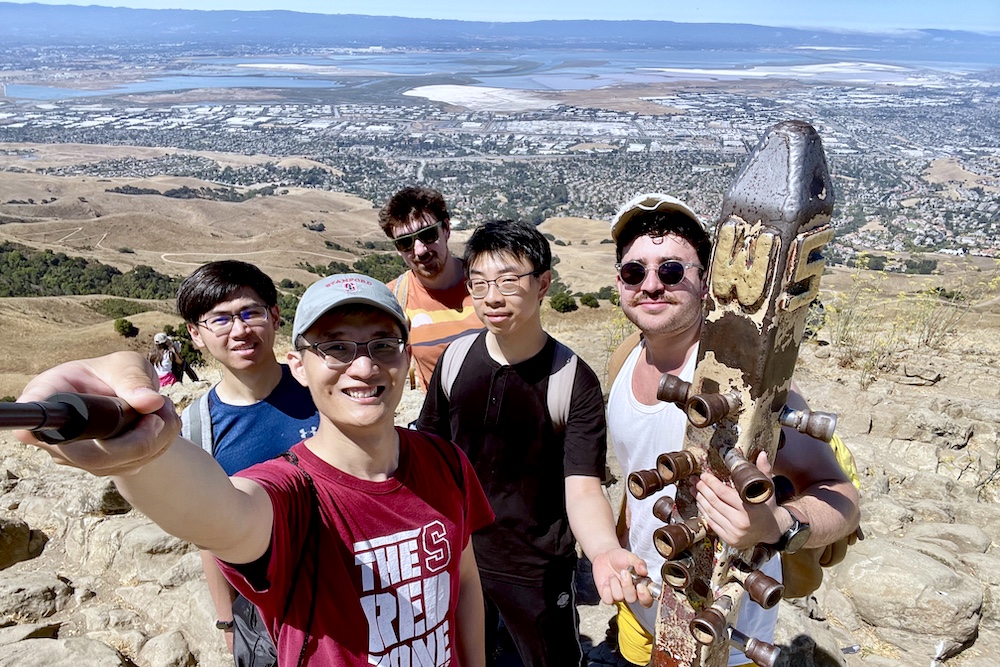
Mission Peak Hike (August 2025)
We made it to the iconic Mission Peak's pole in just over 2 hours despite the scorching sun! Quiz: Where is the Hoover Tower in the background?
Mission Peak Hike (August 2025)
We made it to the iconic Mission Peak's pole in just over 2 hours despite the scorching sun! Quiz: Where is the Hoover Tower in the background?
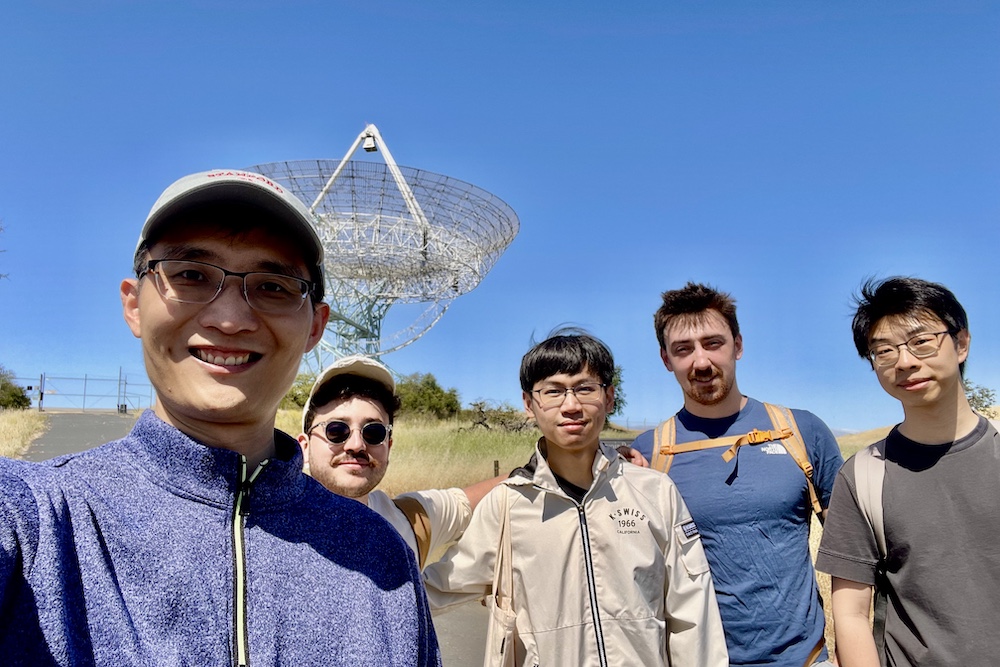
Hike the Dish (May 2025)
While smiling at the camera, the group contemplated on the engineering marvel of the Dish, including its perfect shape and precise rotational motion.
Hike the Dish (May 2025)
While smiling at the camera, the group contemplated on the engineering marvel of the Dish, including its perfect shape and precise rotational motion.
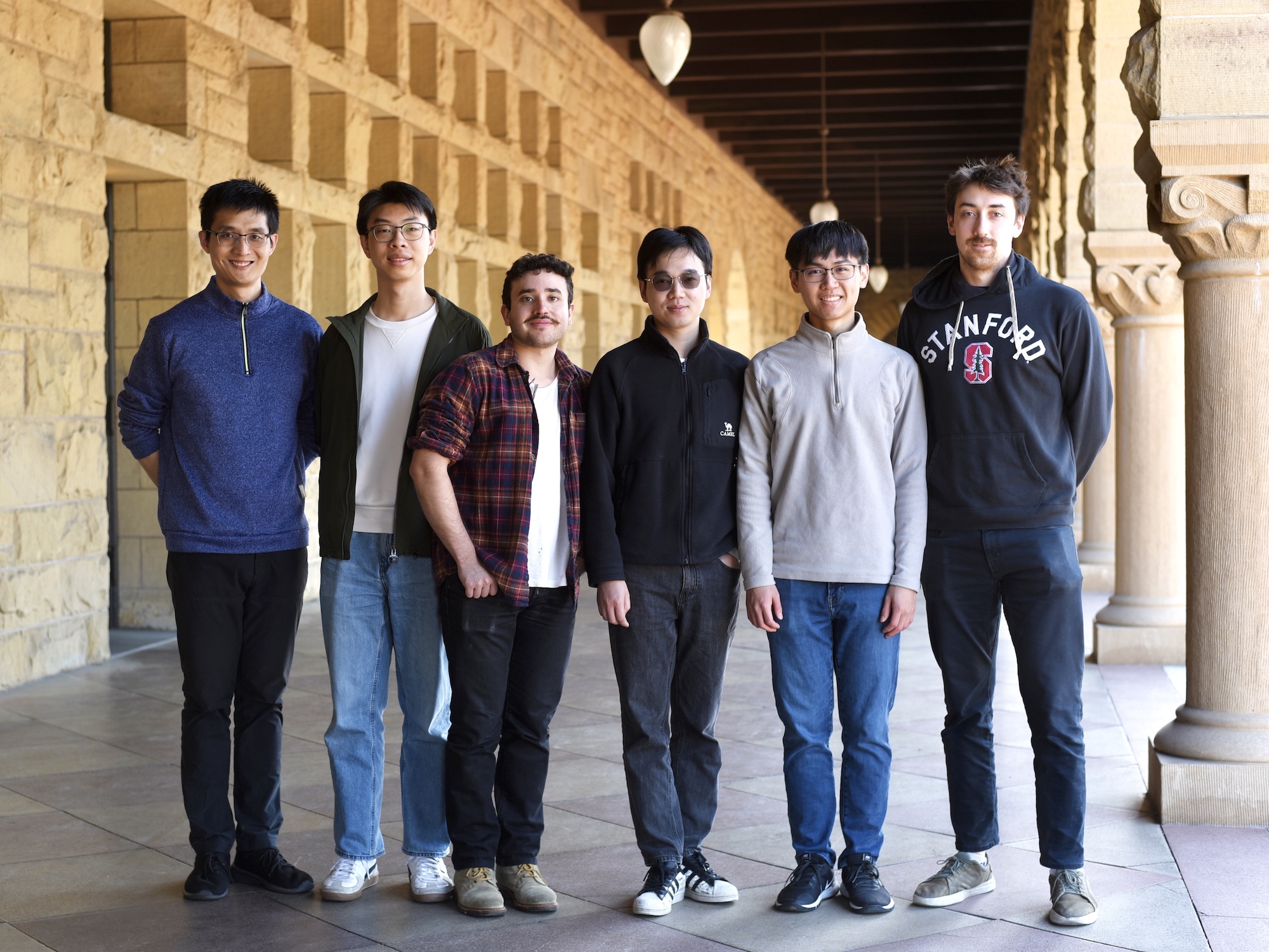
Group photo (April 2025)
It's spring time and everyone smiles! Left to right: Alfred, Patrick, Jacob, Chenhang, Yu-Che, and Henry.
Group photo (April 2025)
It's spring time and everyone smiles! Left to right: Alfred, Patrick, Jacob, Chenhang, Yu-Che, and Henry.
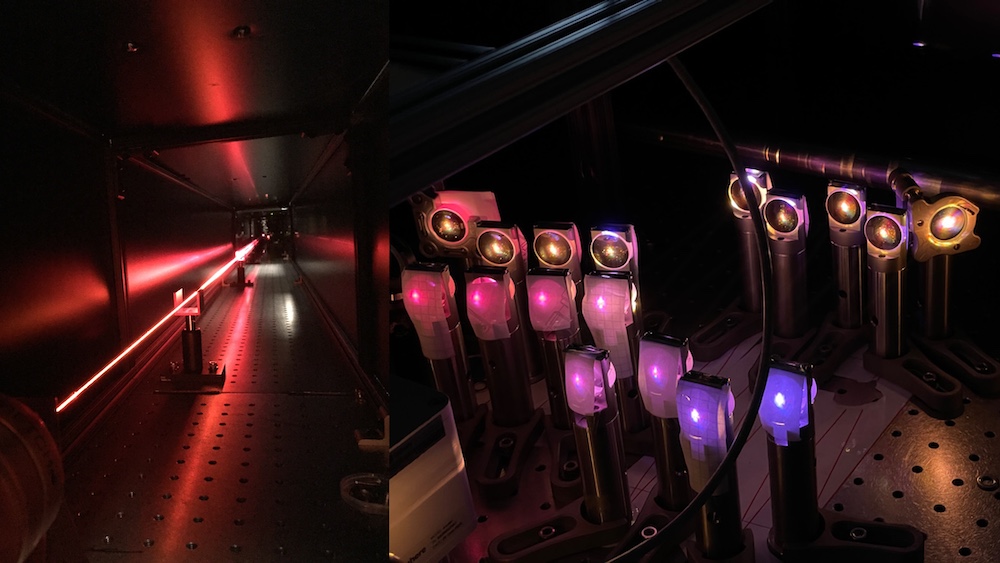
A different kind of “neon light”
To obtain high-energy, few-cycle visible/near-infrared pulses, the output of a commercial amplified laser system is first sent through a six-meter-long hollow-core fiber filled with noble gas (e.g., neon) for spectral broadening (left) and then temporally compressed by an array of chirped mirrors (right).
A different kind of “neon light”
To obtain high-energy, few-cycle visible/near-infrared pulses, the output of a commercial amplified laser system is first sent through a six-meter-long hollow-core fiber filled with noble gas (e.g., neon) for spectral broadening (left) and then temporally compressed by an array of chirped mirrors (right).
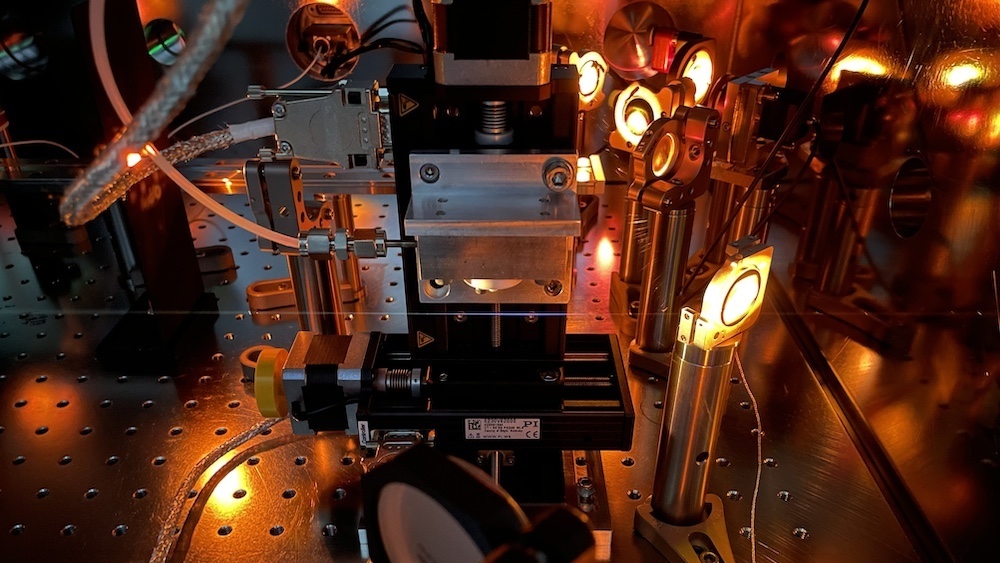
Laser-induced plasma/attosecond pulses
A view of the high-harmonic generation chamber and the focused few-cycle laser beam, which generates plasma under atmosphere (shown here) and attosecond pulses under vacuum with a noble gas target.
Laser-induced plasma/attosecond pulses
A view of the high-harmonic generation chamber and the focused few-cycle laser beam, which generates plasma under atmosphere (shown here) and attosecond pulses under vacuum with a noble gas target.
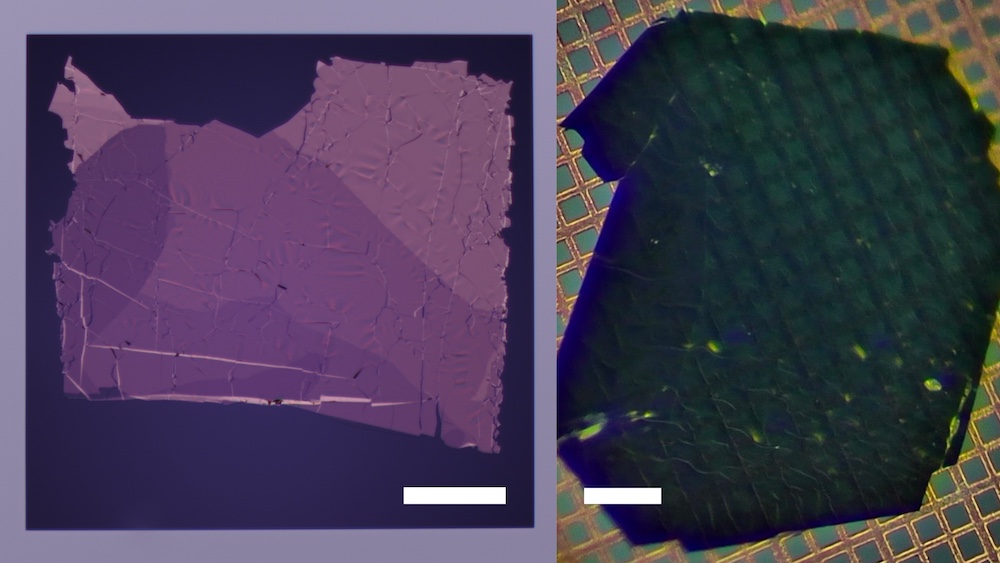
Large-area, free-standing films
Ultrathin (< 100 nm) single-crystalline flakes studied by ultrafast electron diffraction and attosecond transient absorption spectroscopy, both in transmission geometry. Left: LaTe3 mounted on a 10-nm-thick silicon nitride window (scale bar, 50 µm). Right: TiSe2 mounted on 600 lines/inch copper grids (scale bar, 100 µm).
Large-area, free-standing films
Ultrathin (< 100 nm) single-crystalline flakes studied by ultrafast electron diffraction and attosecond transient absorption spectroscopy, both in transmission geometry. Left: LaTe3 mounted on a 10-nm-thick silicon nitride window (scale bar, 50 µm). Right: TiSe2 mounted on 600 lines/inch copper grids (scale bar, 100 µm).
Interview with OPTICA
At the 2023 CLEO Conference, Alfred Zong talked about why he decided to pursue a research path at the intersection between ultrafast optics and condensed matter physics. Check out more interview clips here!